
Let Me Re-Introduce Myself
Hello & welcome! It has been a wild year already, and it still feels like it’s barely begun. With so much going on recently, I thought I should take a moment to slow down and introduce myself. It’s sort of strange, but I’ve never done a digital self-introduction. I just show up and share art…
Well buckle up, because that’s all about to change now! I’m going to tell you all a little about myself and what’s going on in the studio these days.
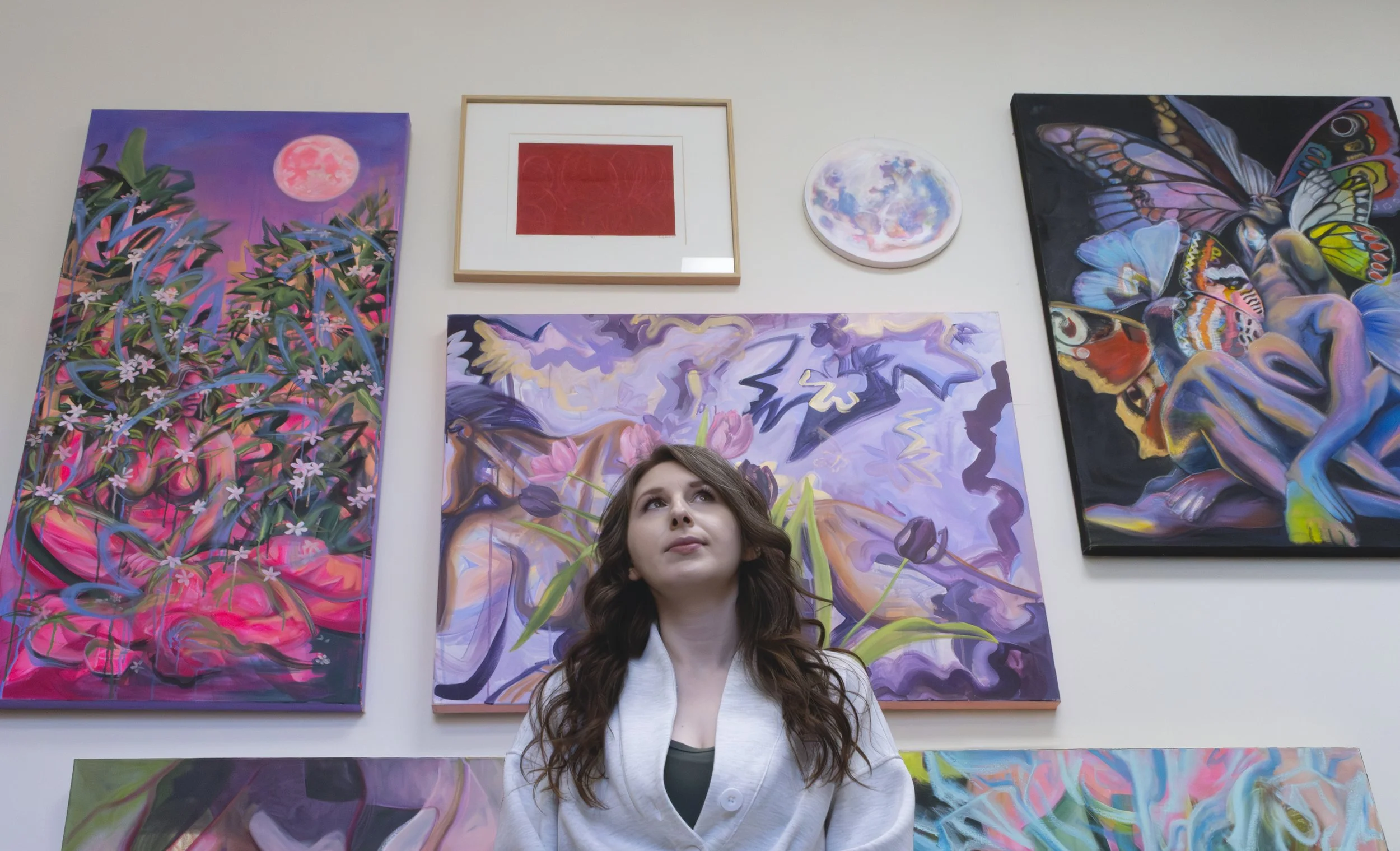
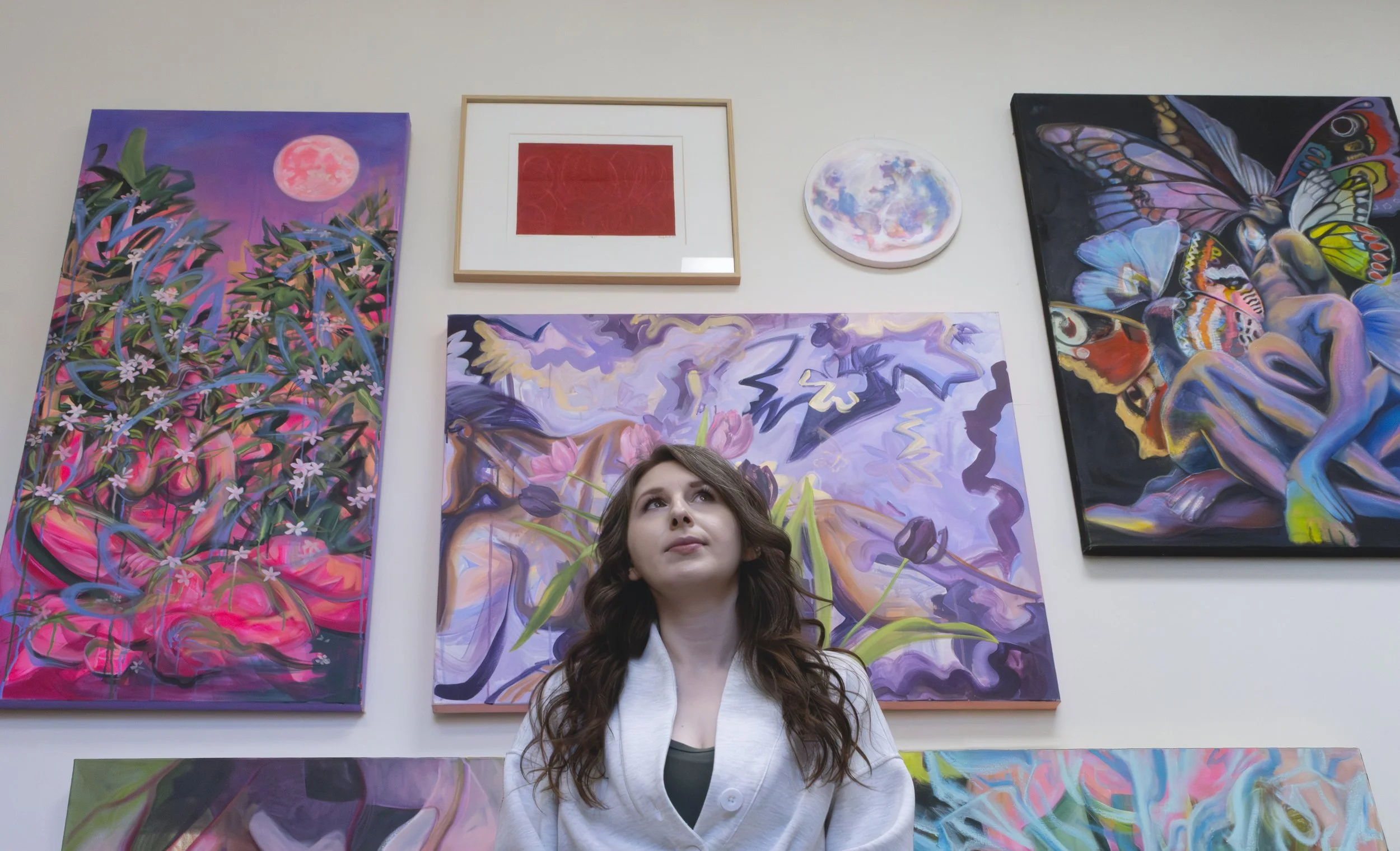
Firstly, Hello. I’m Tia, a visual artist and North Dakota native. I have been making various forms of art for 15+ years. My creative practice is currently focused in painting, specifically surreal oil paintings. I like to use my art to question common perceptions about the world around us. My purpose as a visual artist is to reflect, conceal, mystify, and inspire. Through my creations, I delve into complex concepts with a spirit of curiosity, unearthing the beauty that so often lies within confusion.
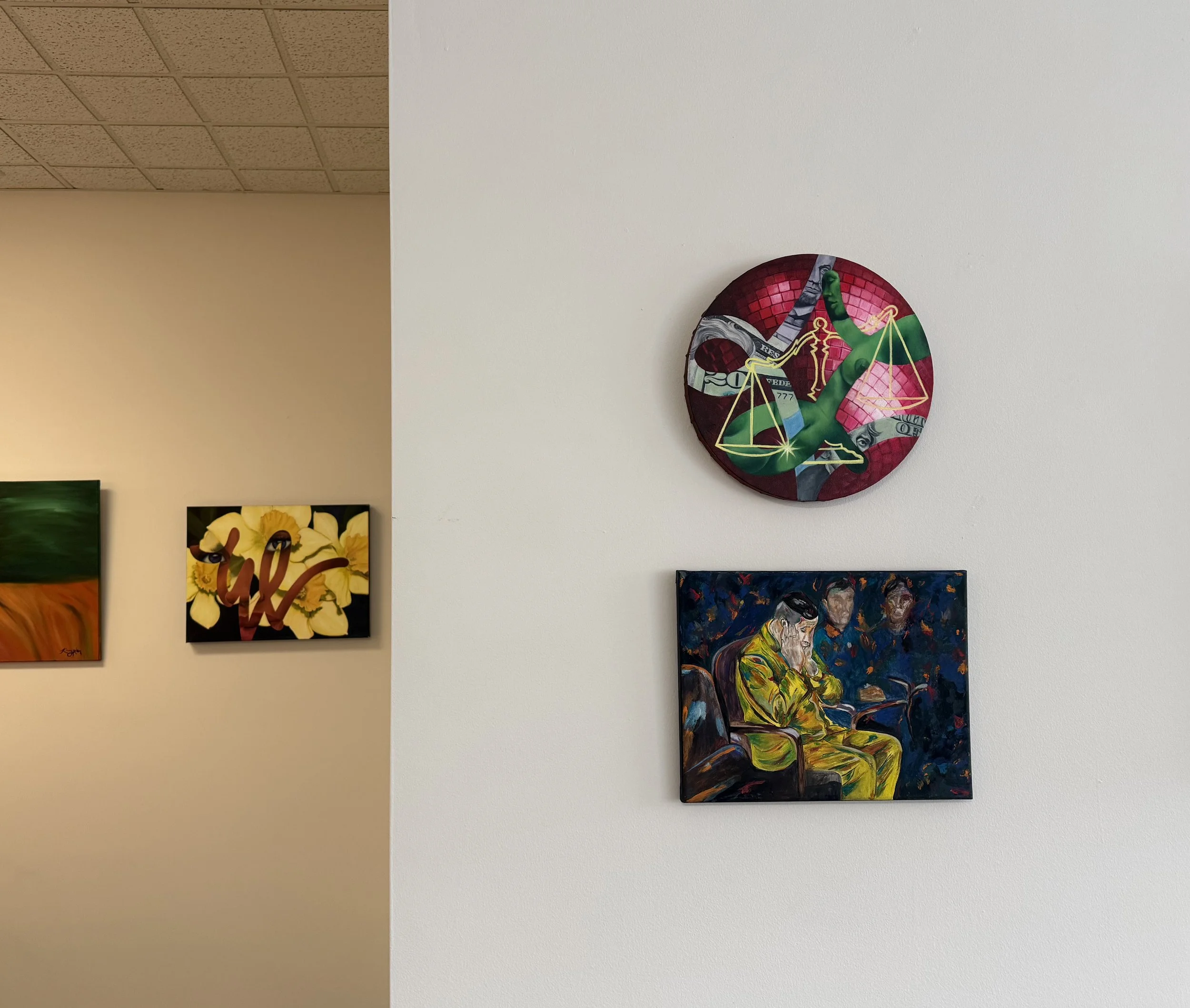
A photo from a recent group show I was a part of
I have always been enchanted by creativity and making things. My passion for art has existed for as long as I can remember.
I enjoy the poetic ambiguity of composing a painting. I get to infuse each piece with truth and meaning that is sincere yet flexible. They are visual metaphors that are entirely up for your interpretation. Pulling from a variety of influences, including art history, pop culture, ancient mythology, and personal observation, my art explores how shared and personal stories overlap. Each piece is an invitation to question, to wonder, and to discover the hidden narratives that connect us all.
While I love expressing myself and my ideas through my art, I’m equally passionate about utilizing art as a means for overall wellbeing. Viewing and creating art are powerful ways to activate your mind. Creativity is good for both your brain and your body, and studies show that viewing original art activates important sensory responses in the brain.
Art is good for you, which is why I’ve been focused on getting out into the community and getting involved in a few new projects that align with this idea.
The People’s Artist.
This national art competition is presented by ArtForum and Johnny Depp. It is a multi-round voting competition with a grand prize of $25,000 plus a feature in ArtForum (a pretty prestigious art publication) and a solo show in a gallery space that focuses on art and wellness in Los Angeles.
Each of those things by themselves would be a dream come true, but all together would be life-changing. Voting for this competition starts May 4th, and I will be posting more information on how to get involved soon, so stay tuned!
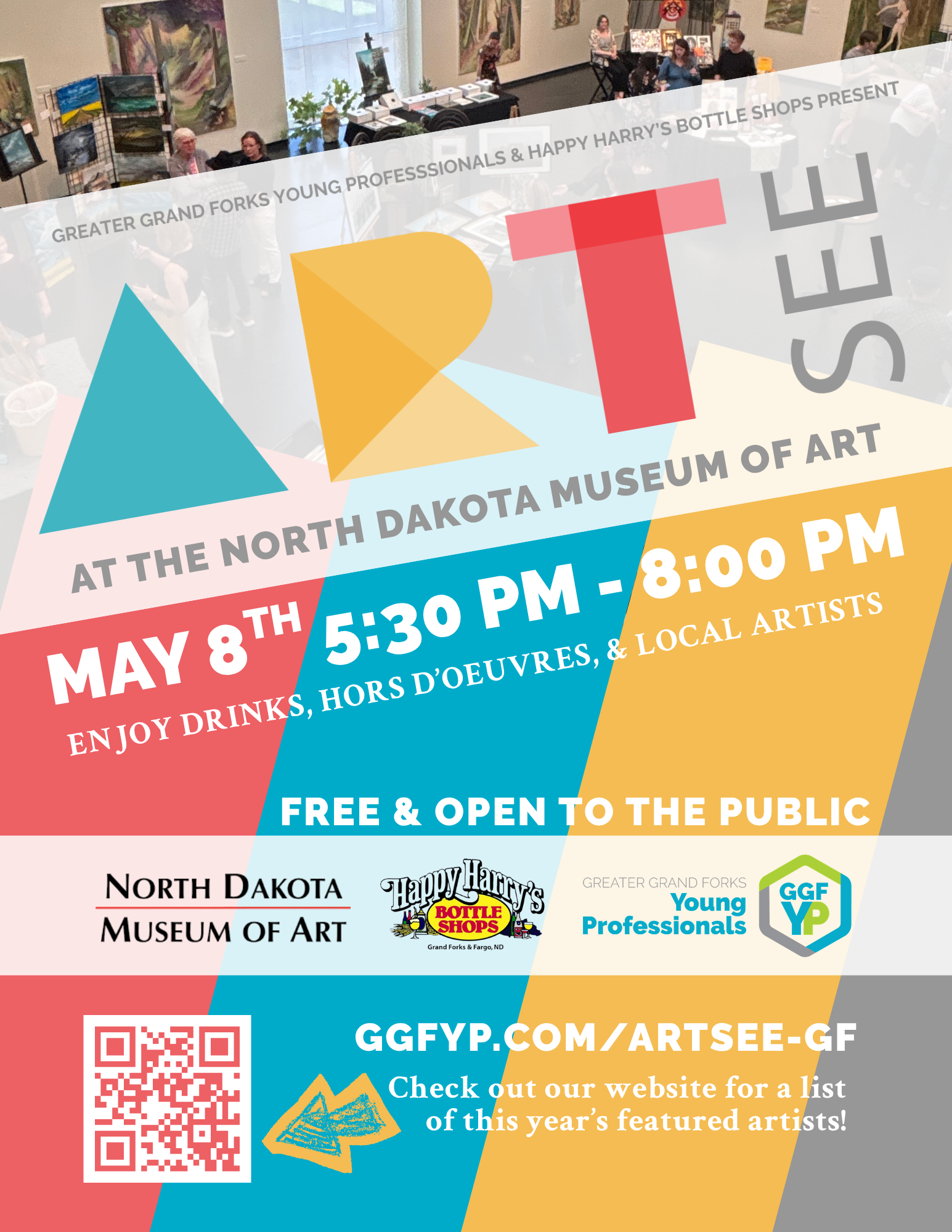
I have also been selected to be a part of a local artist showcase at the North Dakota Museum of art called ArtSee. For this event, a handful of artists are selected to exhibit their work and their craft for an evening of art and community engagement. This event is hosted by the GFYPP on May 8th from 5:30-8:30PM. This is a free event with drinks sponsored by Happy Harry’s. It’s going to be a fun event with cool art and even cooler artists, so please stop by and say hi if you are in the area!
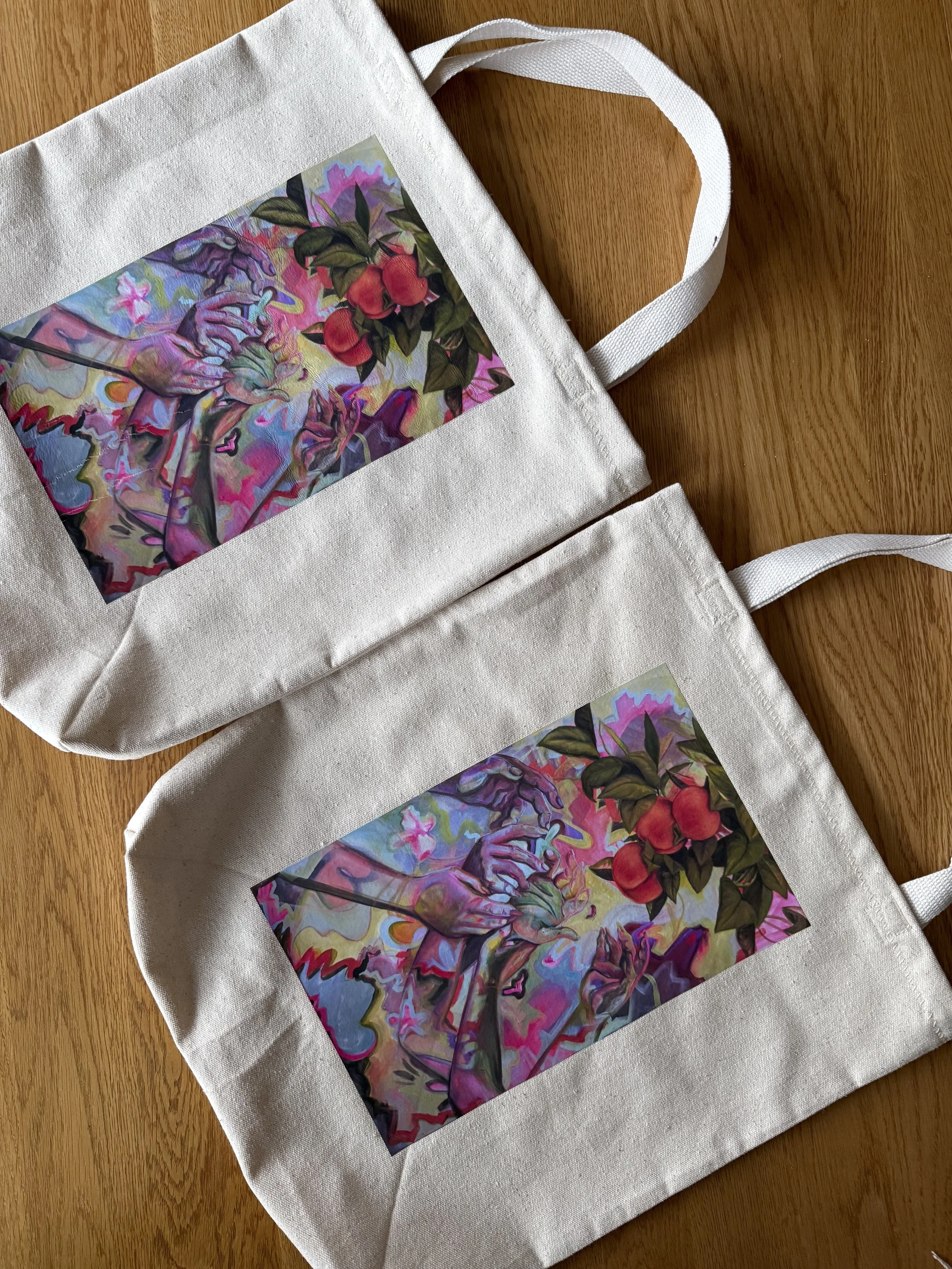
Additionally, I’ll be launching the sale of my handmade tote bags exclusively at ArtSee, so if you have been wanting to get your hands on one, this is where to be. If you can’t make it, don’t worry (too much), I have many more fun events on the horizon. To stay updated on all the latest news and happenings, sign up for my newsletter!
A Test in Life & Death
Yesterday felt like a test. It tested my nerves, my patience, my ideas on time and mortality, but most notably, it tested who I am in the face of fear.
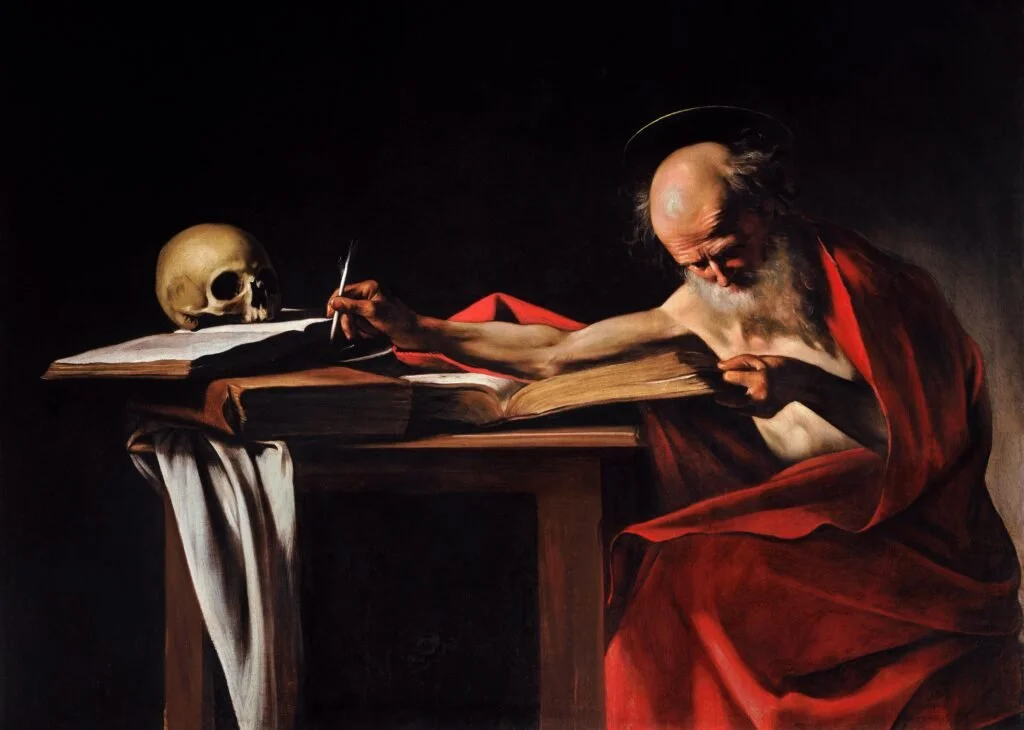
Saint Jerome Writing by Caravaggio
I am not thrilled to say that I crumbled a bit. I spent a solid portion of the day sobbing, grieving the potential destruction nuclear warfare would cause to our earth and our humanity. I spent the rest of the day in deep reflection about all the panic I was feeling. I came to a few conclusions:
The panic is totally, completely, 100% valid.
While the panic is valid, it is the most wasteful use of my precious finite time.
The only way to get through this with my humanity intact is to lean into what is hurting me in the first place - love.
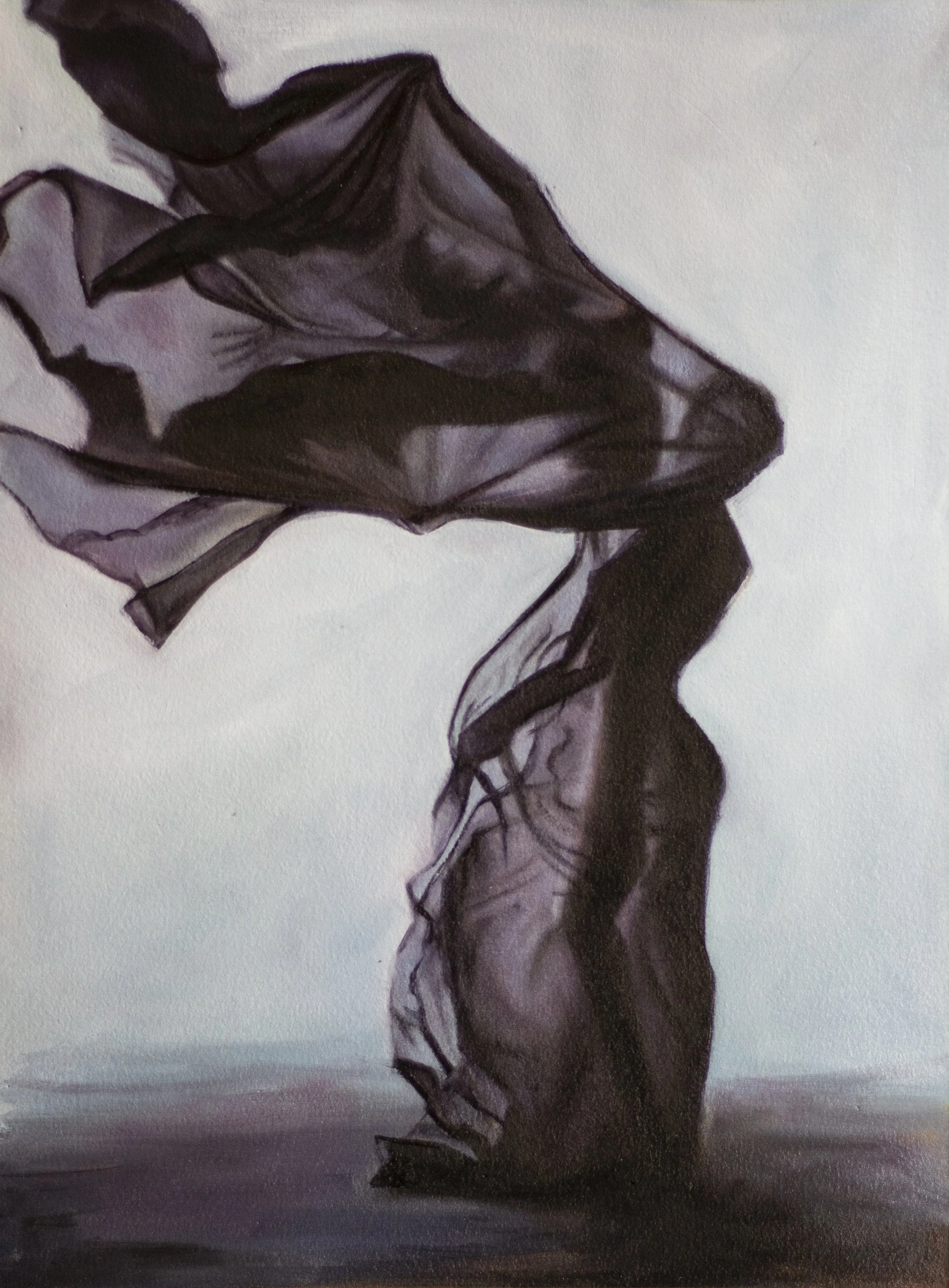
In Form by Tia Permenter
I love this life. I love our lush, vibrant planet. I love how magical and miraculous it is that we exist at all.
It is all so fucking beautiful and inspiring, that the thought of any inch of it being bombed and toxified further makes me ache. So I spun it around. I stopped giving all of my attention to the ache, and I decided I was going to focus on that feeling of love instead. I’m no longer going to let myself be broken down, rather I will let myself be broken open, like a seed ready to sprout with new life. I will no longer cower in the face of these fears.
To sit and stew in that space of panic is nothing but a waste of time, and time is fickle. We will never have enough of it. What do you really accomplish operating from a mental state of fear? Cognitive function decreases under stress. Fear only perpetuates more fear. The only way out is through. And the only way through is with the help of what we love.
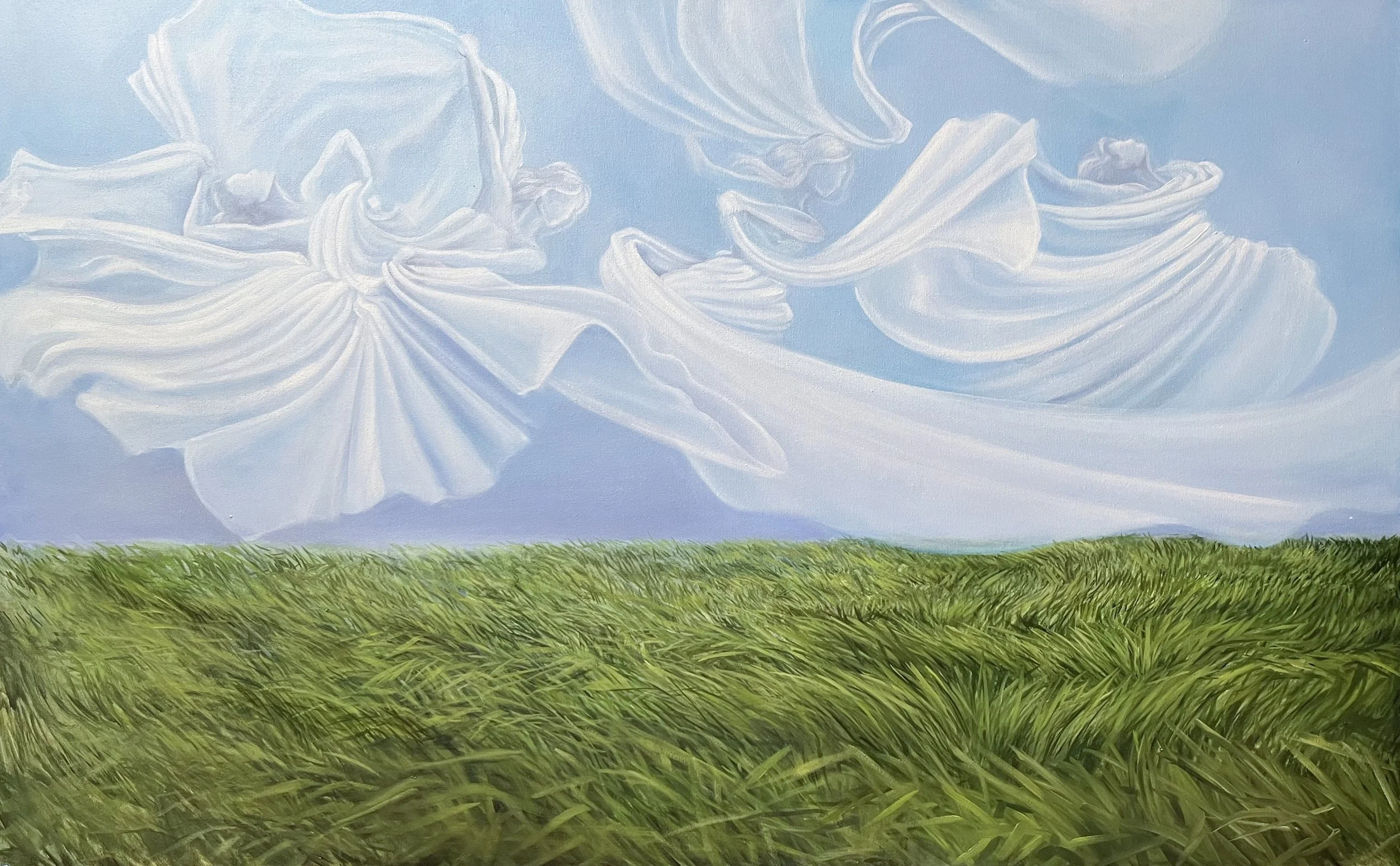
Yesterday was a test in life and death.
It asked me one simple question, “Now that you see so clearly how finite all of this is, how are you going to live this singular precious life before it’s all gone?” I’m still sorting out my answers and intentions, but I know I’m going to do it all with a fiery passion, and gratitude for getting to exist in the same world as trees and pomegranates and my people. I will fight for this existence fiercely, and I’ll do what I can to fill the time that I have with love, presence and as much inspiration for the future as I can conjure.
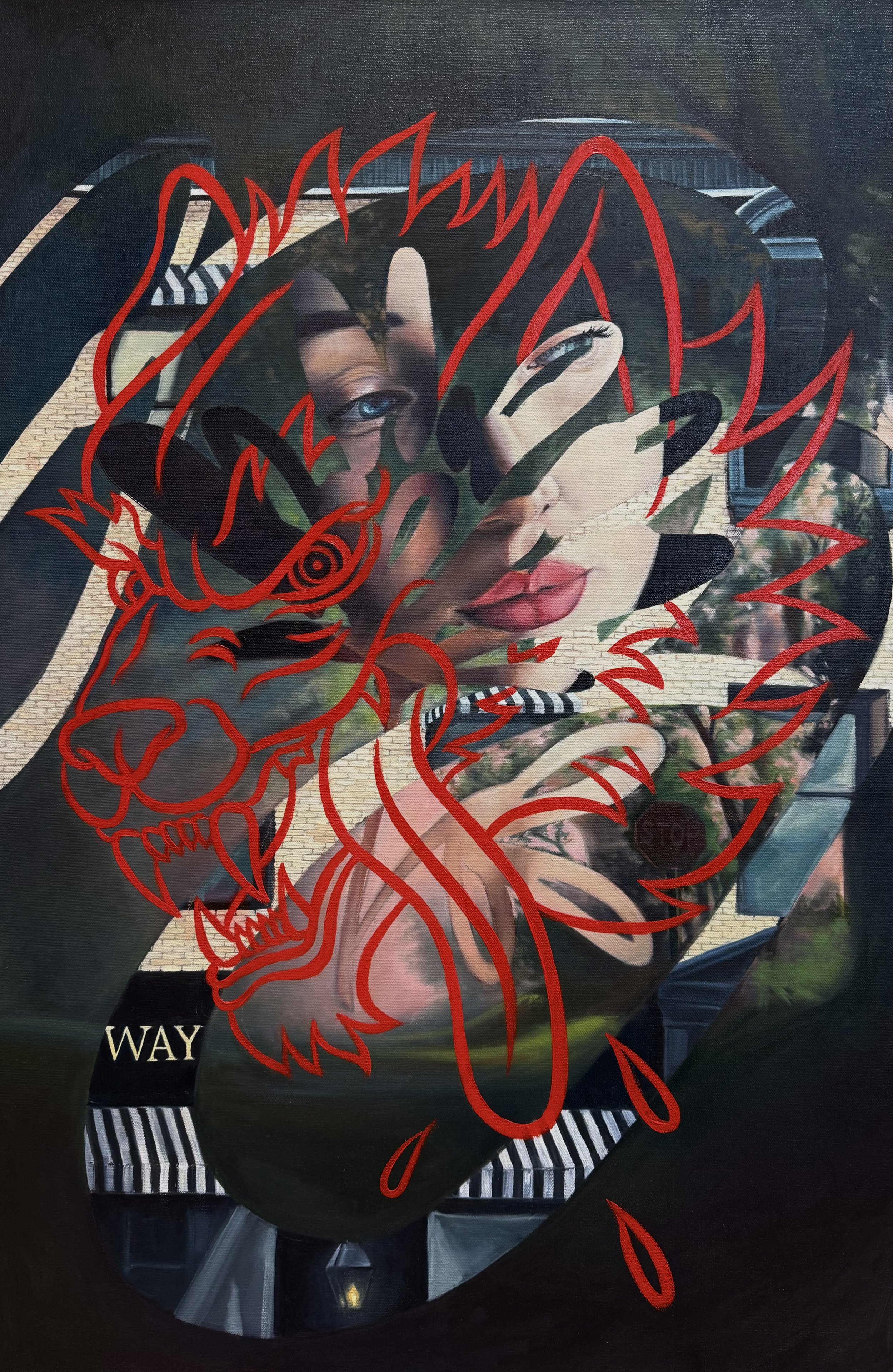
Whistle in the Dark
To whistle in the dark means to act unafraid in a fearful situation. For me, this phrase holds a lesson, that being able to keep your composure can serve as an act of defense.
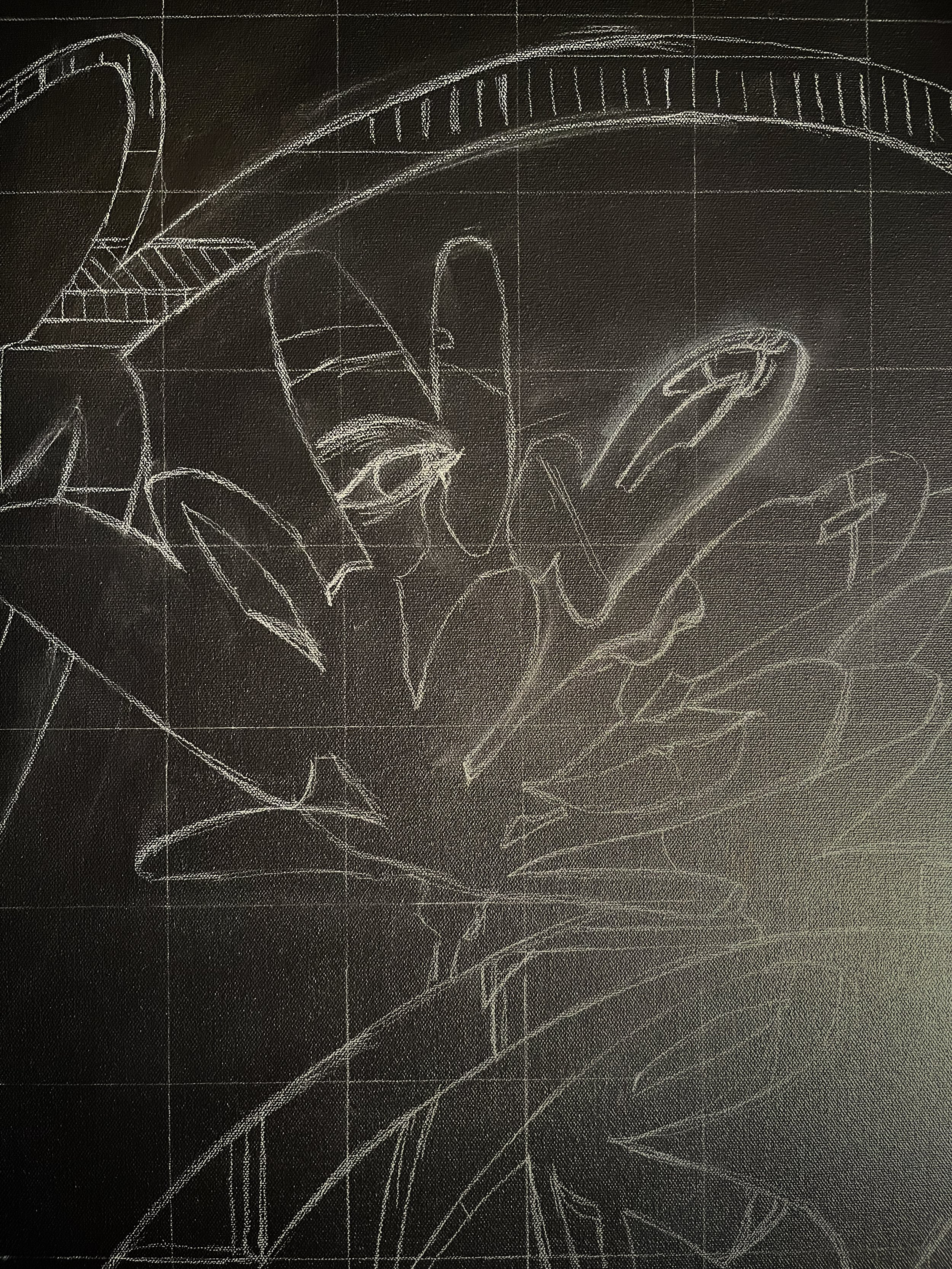
The idea for this painting came to me over a year ago. It was early 2025. A new administration was entering office and it was a time where fear and uncertainty felt like they were becoming normalized in new aspects of life. Things that were once familiar and reliable were becoming scary and unrecognizeable.
It reminded me of becoming afraid of the dark after spending half of my life loving the night. From early childhood to my 20’s I struggled with insomnia. I was 6 when I decided nighttime was my favorite time to be alone. I loved existing unobserved. Even now, I love the peaceful, mysterious magic of the night.
But the world is a scary and violent place for women. The dark too easily becomes a place that conceals danger and those who intend to cause harm.
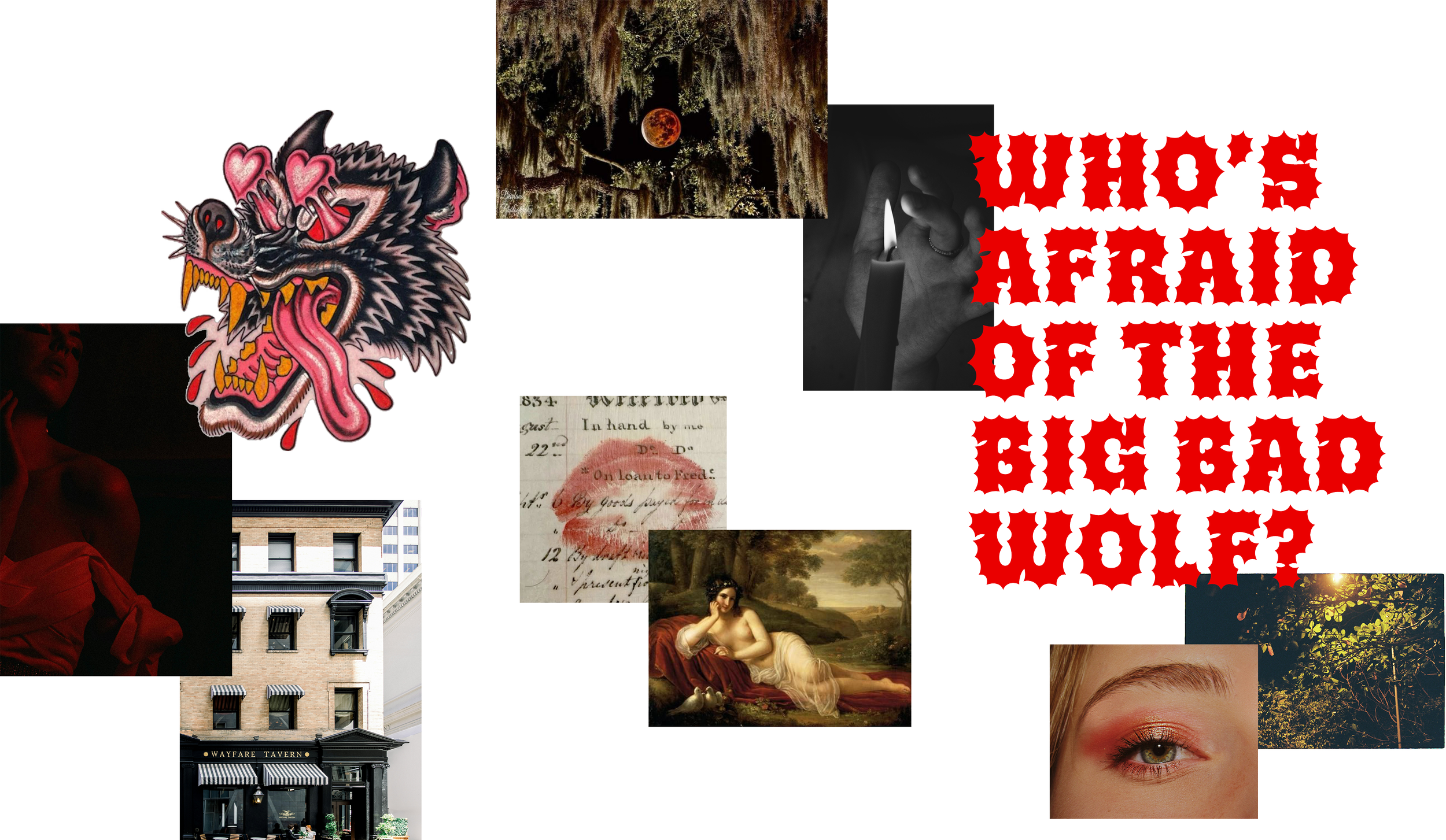
“Whistle in the Dark” inspiration board
I get deeply upset when I feel fear in the dark. It feels like something so familiar has been taken from me, and left in its place was an expectation to perform bravery… to wear a calm demeanor as though it were an essential piece of armor. We dress up our fear in a little red dress with a set of keys laced between our fingers like claws and a sweet smile on our faces.
We work to claim some control over our fear with rape whistles and mace, but how do you really fight a fear fueled by other people’s senseless hate?
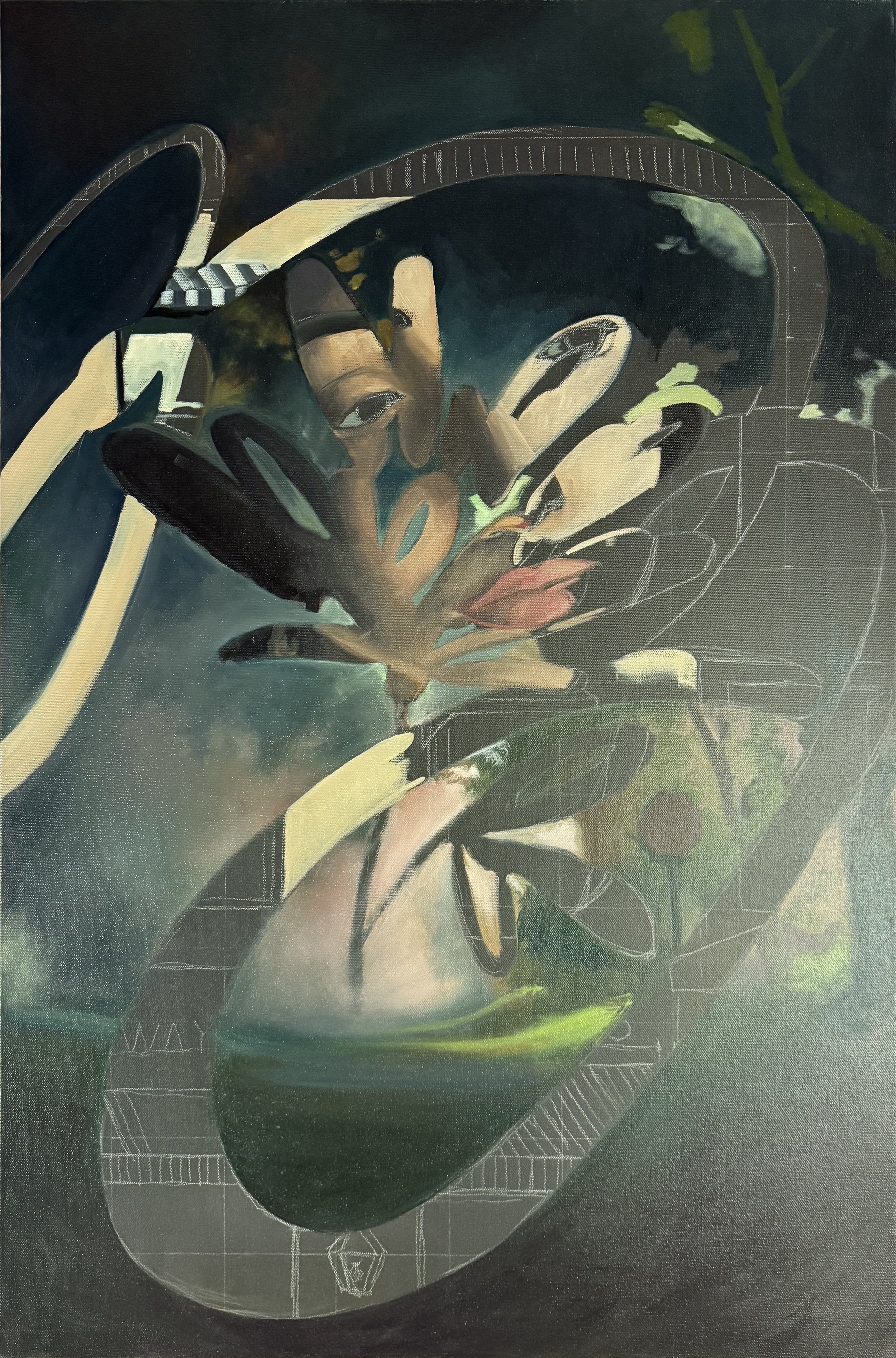
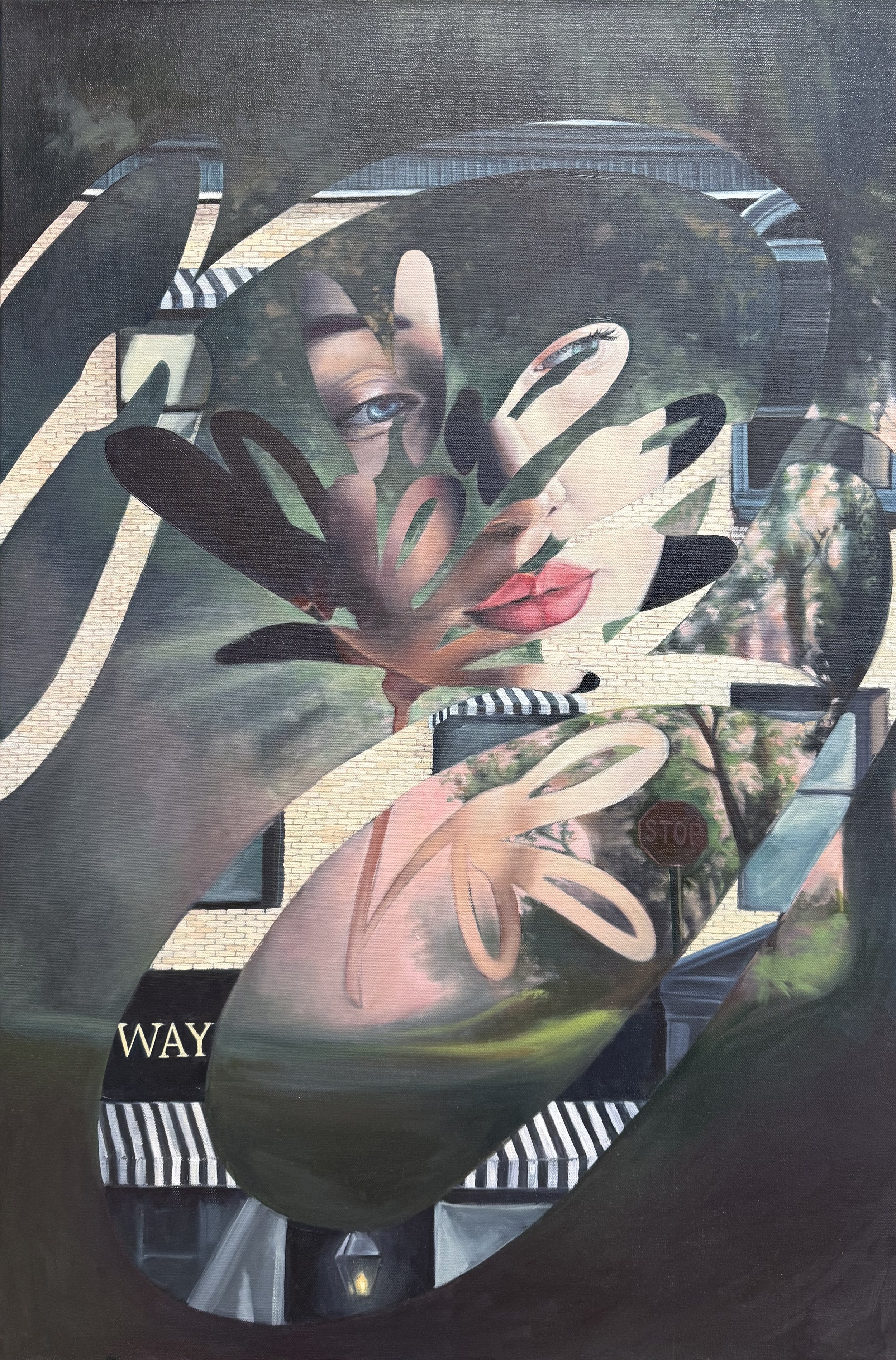
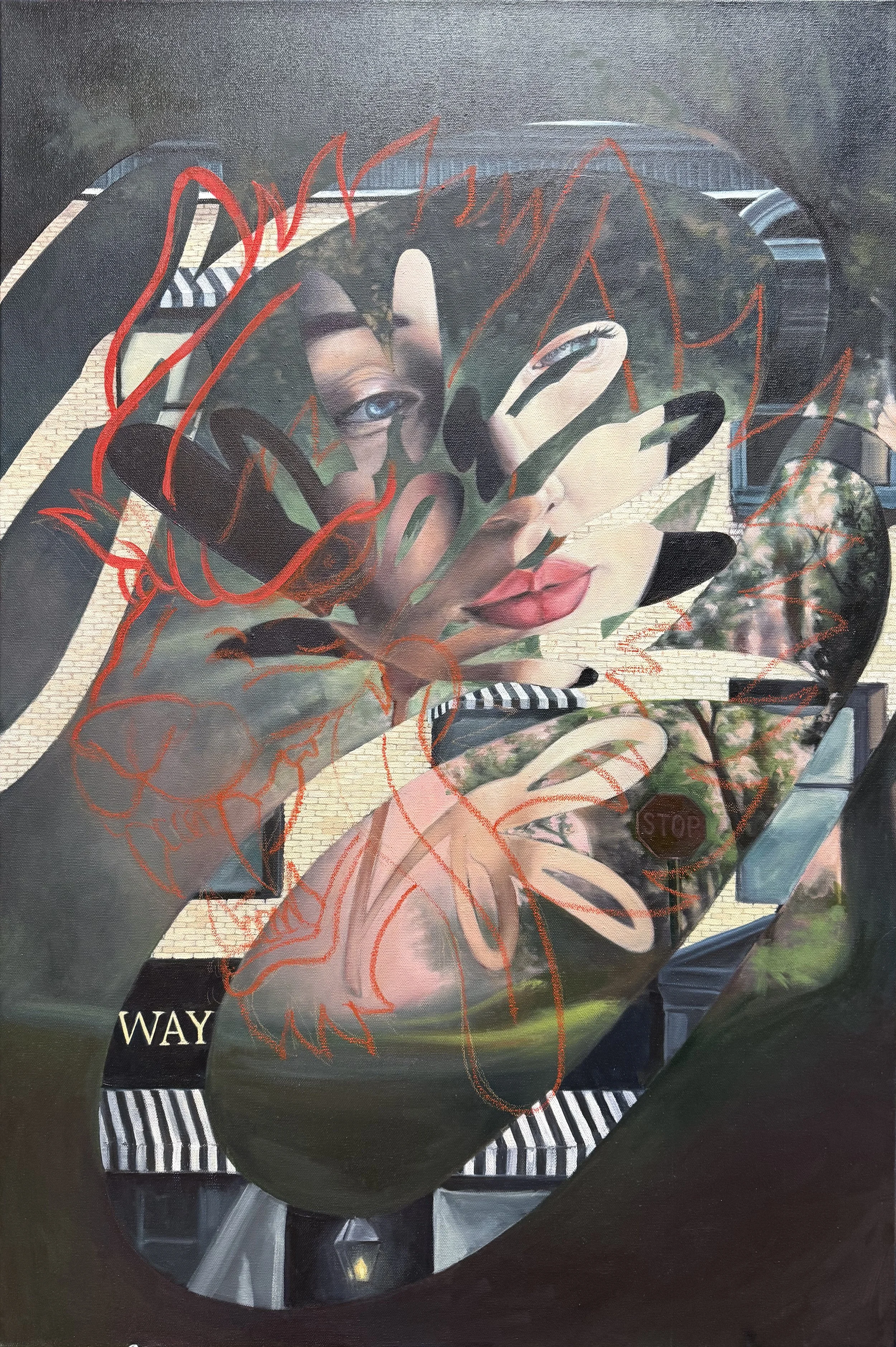
This painting started as my way of reckoning with that sinking feeling of fear, the theft of safety, and the under-recognized trauma of putting a brave face on. But, as I came closer to finishing it, I felt like I was speaking to something even bigger. To live in the United States right now is, for many, an experience of darkness and fear. A feeling that can be likened to how it feels to be a woman alone at night.
Panic.
Fight or flight.
Am I being followed?
Am I being paranoid?
It’s the confused terror that comes with not being able to see the whole truth. And we are expected to get up everyday and act as though things are normal. We live like there is nothing to be afraid of. We become a whistle in the dark.
Who’s afraid of the big bad wolf?
Are you?
Am I?
No.
I was swallowed whole long ago.
I’ve been living in the belly of this wretched beast. But, I've sharpened teeth on these bones I call home.

The Language of Paint
Creating art is an essential form of communication for me. Painting is the language I use to relate to the world around me, especially during times when words fail me. Growing up with ADHD, I often found it difficult to articulate the overwhelming emotions and constant flow of thoughts that clouded my mind. Instead of being sidelined by my struggles, I gravitated toward visual art, which has become my preferred method of expression. Over the years, my creative practice has evolved into a sacred ritual—an opportunity to reflect, meditate, and explore my experiences.
I am constantly working to visualize the indescribable, ephemeral elements of life. My process is inspired by the ways in which we connect to each other, how we form identity, how we engage with our experiences, and the meaning we create out of it all. I want to immortalize the quiddity of the human experience through my work.
I work to uncover the beauty within them. I see myself as an alchemist who makes gold out of raw earth. I conjure loveliness from things from confusing and unexpected places. I want to make beautiful the things that are hard for us to approach, accept or comprehend. I want to entice and inspire you to think and feel through a visual experience.


The Evolution of Art & Storytelling
Because art possesses a unique ability to relay the less tangible and often elusive elements of life, it becomes a powerful and impactful format for metaphor. This creative medium allows us to bend and shape our realities, providing a means to communicate our deepest hopes, dreams, fears, and fantasies. Telling a story visually opens up a realm where the use of color, composition, and style can come together harmoniously to express complex ideas in a language that is far older than any written form of communication.

Art and storytelling have been a part of humanity since the beginning. As soon as people became self-aware, they began to find ways to share their experiences. In ancient times, storytelling was primarily an oral tradition, starting around 200,000 BCE when spoken language emerged.
This practice became a ritual in many culture, passing down important information to future generations. People would gather around campfires or in public venues, creating communities through shared stories. This fostered deeper collaboration, societal advancement, and structured belief systems.
By 40,800 BCE, storytelling had taken an interesting turn. It’s in this time period that we start seeing the first cave paintings, showing a distinct shift in human expression into the earliest examples of visual art. This quickly changed the game in storytelling and the purpose they served within the community. Instead of stories that focused on instruction based knowledge, visual stories also highlighted how people experienced and understood their world from a metaphorical perspective. Art became a way of making meaning as well as sharing a deeper understanding of the world with others.

Art has always revolved around intricate relationships and meaningful connections to the people, places, and experiences that surround us.
Because art possesses a unique ability to relay the less tangible and often elusive elements of life, it becomes a powerful and impactful format for metaphor. This creative medium allows us to bend and shape our realities, providing a means to communicate our deepest hopes, dreams, fears, and fantasies. Telling a story visually opens up a realm where the use of color, composition, and style can come together harmoniously to express complex ideas in a language that is far older than any written form of communication.
Art continues to serve as a vital conduit for expression, influencing how we perceive and interact with the world around us. Art possesses a profound impact as a universal language that transcends barriers, connecting individuals and communities through shared experiences and emotions. Visual storytelling taps into the essence of our humanity, allowing us to convey complex narratives in a way that resonates deeply with others. Our culture continues to revolve around aesthetics and visual material, influencing everything from social movements to personal identity. As we engage with art, we not only celebrate creativity but also cultivate an environment where ideas thrive, ultimately inspiring growth and understanding in our society.

The Art of Living
Art and life are inextricably woven together and have been throughout all of known history. The expression of our ideas and imagination through creative work is a deeply rooted human act. So much so, that for most of human history creativity is tied in some way to magic, spirituality, or religion. To make and share art in any of its infinite forms is an ancient practice that builds community and culture.
Why Life is Your Greatest Masterpiece
Life is defined by oxford dictionary as, “the condition that distinguishes animals and plants from inorganic matter, including the capacity for growth, reproduction, functional activity, and continual change preceding death.” I think the definition for human life can be expanded to include creativity, imagination and intentional action.
We think, imagine, and create, turning our view of the world into inspiration, new ideas, and art.

It’s more accurate to say that life is art. But, that’s only if you treat it that way.
It takes reflection, intention and action to create anything, especially a beautiful life. In the centuries of commerce, capitalism and consumerism, we have started to conflate art with the explicit act of creation, but it is far more transcendent than that. Art is more than a word or object, it is a tool we employ to give and share meaning. It is a language in which we speak about what inspires us. Being artful is a way of perceiving, living with a focus on intentionally cultivating beauty and meaning in each moment.
Art and life are tightly woven together and have been throughout human history. Expressing ideas through creativity, or art, is one of the oldest human practices. It’s deeply linked to other elements of societal evolution, including magic (which pre-dated the sciences), spirituality, and religion. To make and share art in any of its forms is to engage with a long history of creative expression, storytelling, community building and culture creation.
Yet, in our current world, it all feels increasingly superficial.
We consume aesthetic content marketed as art to distract us from the content of our lives. All the while the contemporary art world is screaming “art is life,” while whispering, “but only if you can pay for it.”

You can apply this way of thinking and behaving to your whole life. Every day, you are shaping your experience from moment to moment. With every choice, thought and action you take, you are conjuring what your life looks and feels like.
When you shift to seeing life as an endless act of creativity, you can make it into something that suits your tastes - something that feels like a well crafted work of art. You become the artist, decisively crafting beauty throughout your entire existence. Living this way also enhances your admiration for the intentions and creations of others. It is an individually rewarding practice that also pulls you more fully into the collective of humanity through your active participation in the human experience.
The artistry of the universe is that we are all bound by this shared ability to imagine and be inspired. More than anything else, art is distinguished by the inspiration it elicits in others, and the connection it makes possible. We only grow closer and stronger when we share in it fully, and our whole world can become as beautiful as we are willing to make it.